
Table of Contents
- Give Your Remaining Marketing Budget a Longer Life
- Start Your Marketing Budget Planning With Next Year’s Goals
- What Your Marketing Budget Should Cover in a Video Project
- Commit Your Marketing Budget Now and Plan a Q1 Shoot
- Three Ways to Turn Your Marketing Budget Into Lasting Content
- How One Conference Marketing Budget Supported a Year of Content
- Set a Video Production Budget Around the Full Scope
- Keep Year-End Planning Moving Without Rushing the Story
- Put This Year’s Marketing Budget Behind Next Year’s Story
November arrives, next year’s plans start taking shape, and someone asks what’s left in the marketing budget. If your organization’s budget closes in December, that question can come with a deadline: put the remaining funds to work before the year ends.
It’s tempting to choose whatever can happen fastest. But a last-minute purchase doesn’t necessarily solve a long-term communication problem.
A thoughtful investment in video production can do both. Capture the people, experiences, and stories that make your organization matter, and you can enter the new year with content ready to support fundraising, recruitment, sales, and outreach.
At Sean McVeigh Media, that’s how we approach year-end projects: start with the story your audience needs, then plan how it can keep working throughout the year.
Give Your Remaining Marketing Budget a Longer Life
A use it or lose it budget creates urgency. It can also create an opportunity to fund something your team has been putting off: an updated introduction to your organization, a compelling donor story, or a collection of interviews that shows the difference your work makes.
With a clear plan, video marketing gives that investment several places to go.
- Your website can introduce visitors to your mission and people.
- Your email campaigns can direct readers to a relevant story.
- Your events can bring your impact to life on screen.
- Your recruitment efforts can show candidates what joining your organization feels like.
- Your social channels can share shorter moments from the same production.
The goal is to create evergreen video content built around subjects that remain useful beyond December. Your values, approach, and community impact usually have a longer shelf life than a seasonal offer.
For a team managing a nonprofit marketing budget, that flexibility matters. The same is true for universities, healthcare organizations, and businesses whose staff need dependable content without starting a new project every month.
Start Your Marketing Budget Planning With Next Year’s Goals
Before deciding what to film, consider what your organization needs to accomplish.
Are you introducing a program? Preparing for a capital campaign? Helping prospective patients understand your services? Recruiting employees or students?
Effective marketing budget planning connects the investment to that goal. If you’re deciding how to allocate a marketing budget, begin with the communication gaps that are making your team’s work harder.
Perhaps your website explains what you do but never shows who benefits. Maybe your recruiters have plenty of job descriptions but few authentic employee stories. Those are useful starting points for marketing budget allocation.
A content marketing budget is more useful when you connect spending to your strategy. Identify the assets you need, where people will see them, and what you want them to do next.
From there, a video content strategy can connect one production to several priorities instead of leaving your team with a finished video and no distribution plan.
What Your Marketing Budget Should Cover in a Video Project
Professional video production services involve more than showing up with cameras. The planning, interview approach, and editing decisions determine whether your content will be useful after its first appearance.
Find the Story Before Filming Begins
We begin by understanding your audience and the action you want to encourage. That gives the project a purpose and helps us identify the people best positioned to tell the story.
For brand story video production, this often means moving beyond a list of accomplishments and finding an experience that makes your mission tangible. A film about a hospital program, for example, may become clearer when a clinician and a patient can describe what the care experience actually involves. That audience-first approach is central to brand storytelling.
The craft matters, too. Perspective, sound, and editing shape how an audience experiences a story. Thoughtful professional videography brings those choices together around a clear message.
Make the Marketing Budget Cover Shorter Edits
A main film and a social clip serve different purposes. Planning both before the shoot helps us capture the interviews, supporting footage, and framing each version needs.
We discuss those shorter edits early and define them in the project scope. A brief vertical interview clip may need different framing and a faster opening than a homepage film. Capturing that material on the same shoot makes repurposing video content part of the production plan rather than a separate scramble after delivery.
That planning gives your team footage it can adapt for social posts and ads as well as the main film. Each version can then be shaped for the channel where its audience will see it.
Use Aerial Footage When It Adds Context
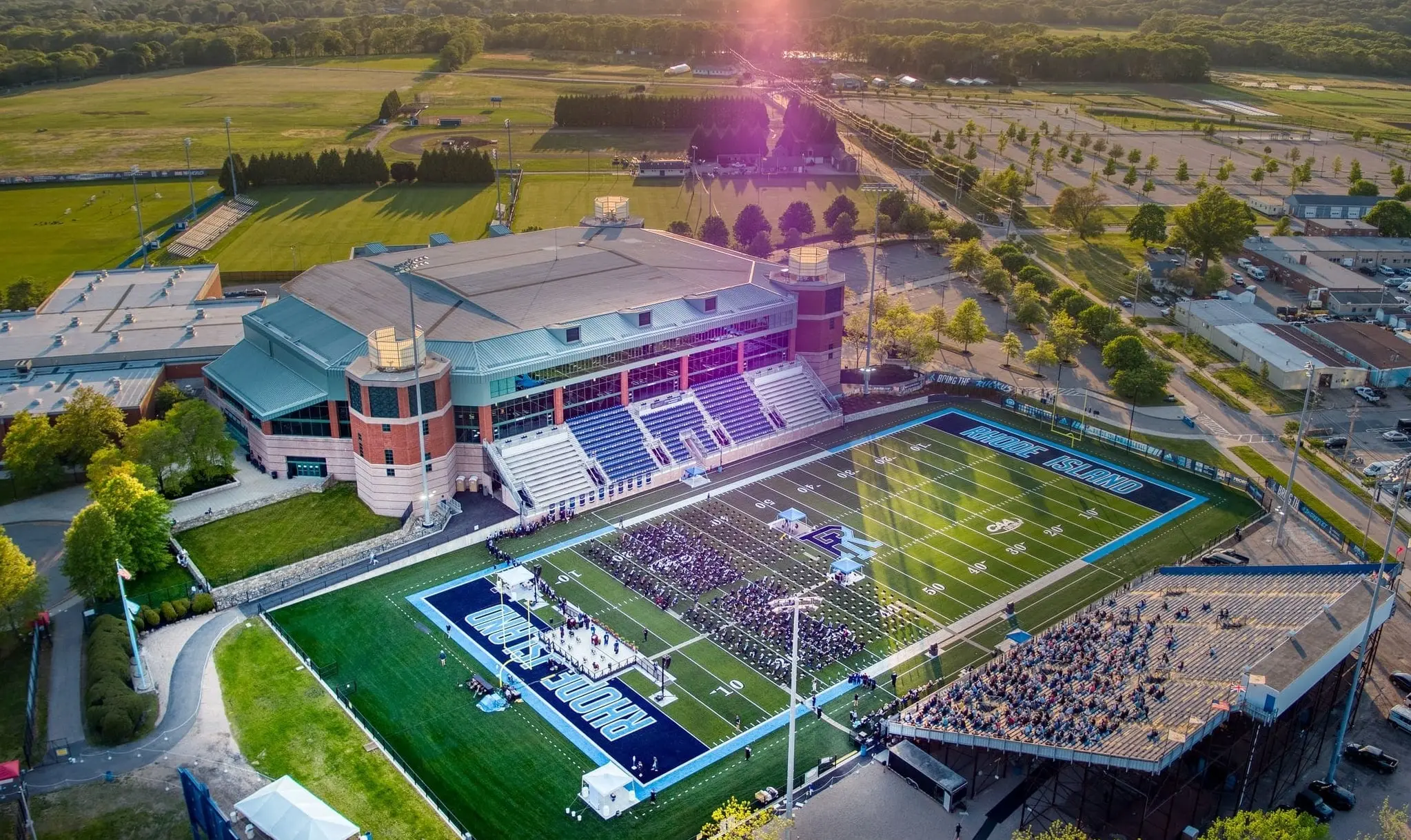
Drone footage can establish the scale of a campus, introduce a location, or show how a facility fits into its community. Our FAA-certified pilots can support that part of the story when aerial coverage is appropriate.
We can discuss including drone footage in the same production plan, with scheduling dependent on the location, weather, and flight requirements.
For a university recruitment film, an aerial view might help prospective students understand the campus setting. For an intimate interview, it may add little. We make that choice around the story, then plan any needed permissions and ground coverage before the shoot day.
Commit Your Marketing Budget Now and Plan a Q1 Shoot
Using remaining funds doesn’t always require completing a production during the busiest weeks of December.
Depending on your organization’s purchasing rules and the agreed project terms, you may be able to book with a deposit before year-end and schedule filming for Q1. Confirm with your finance team what documentation and timing your organization requires before relying on that approach.
That breathing room can make a real difference. Your team has time to identify interview subjects, prepare locations, and agree on the story without forcing everything into the holiday calendar.
There are two useful paths: film before year-end so content is ready for January, or arrange a Q1 production with a realistic delivery schedule. The right choice depends on when you need the finished work.
Either path benefits from a written scope before the budget closes. Agree on the story, deliverables, review process, and expected milestones so your finance and communications teams are working from the same plan. A deposit can reserve production time, but whether it counts against this year’s budget is a decision for your organization’s finance team.
Three Ways to Turn Your Marketing Budget Into Lasting Content
1. Put Your Marketing Budget Behind a Flagship Story
A central film gives your organization a strong introduction that can support multiple campaigns.
For corporate video production, that might mean showing how your team solves a customer’s problem. For a university, it could follow a student’s experience. For a nonprofit, it might bring a program’s impact into focus through one participant’s story.
Projects can include:
- Company overview videos that introduce your purpose, people, and approach.
- Employee recruitment videos that show the work and culture behind an open position.
- Customer testimonial video production that lets clients describe their experience in their own words.
- Website video production that gives visitors a clearer understanding of your organization.
This kind of business video production becomes more valuable when you plan its supporting edits and placements alongside the main film.
2. Use Your Marketing Budget to Build a Content Library
A focused shoot can capture interviews, workplace activity, location footage, and details that support several future stories.
For example, one production day might provide material for a main introduction, individual staff profiles, short answers to common questions, and campaign-specific marketing videos.
Mapping the stories to your publishing schedule helps you identify what to capture while everyone is together. The approach we use for a fall video content calendar works for the year ahead as well: assign each planned piece a purpose, a channel, and a likely release window.
Agree on editing deliverables, footage access, and storage arrangements before filming so everyone understands what the library includes.
3. Capture an Event for More Than a Recap
Galas, annual meetings, volunteer activities, and year-end celebrations bring your community together. They also create opportunities to record meaningful interviews and moments you cannot easily recreate.
With the right planning, event footage can support a spring fundraising appeal, an annual report, or promotional video production for the next gathering.
Capture both the occasion and the larger story behind it. A speaker’s explanation of why your mission matters may remain useful long after this year’s event signage comes down.
Plan those interviews before the event begins. Identify a quiet space, get permission from the people you hope to feature, and decide which moments matter beyond the room itself. A short participant interview or a reaction to a milestone may carry a future appeal more effectively than a general montage of the evening.
How One Conference Marketing Budget Supported a Year of Content
Our work with the Massachusetts Realtors Association illustrates this approach.
For its annual September conference, we produced a promotional video alongside shorter social videos that could be released throughout the year. That gave the organization multiple opportunities to keep the event in front of members before the conference began.
The value came from planning a sequence of useful content around one objective. Instead of relying on a single announcement, the team had material it could bring back into its communications over time.
That sequence matters for recurring events. A main promotional film can explain why members should attend; shorter edits can put speakers, benefits, or a key date in front of different audiences as registration approaches. The exact mix depends on the event and its channels, but planning it together gives the organization a coherent campaign rather than disconnected posts.
That is the kind of thinking that helps a video marketing budget support more than one moment.
Set a Video Production Budget Around the Full Scope
A common early question is, “How much does video production cost?”
The answer depends on what the project needs: planning, filming days, locations, crew, interviews, graphics, audio, editing, and the number of finished versions.
A useful video production budget accounts for the complete job. When comparing video production cost estimates, look at what each proposal includes:
- Creative planning and interview preparation.
- Filming locations, crew, and equipment.
- Main video and shorter edits.
- Captions and required formats.
- Music licensing and graphics.
- Review rounds and delivery timing.
Evaluating corporate video production cost this way makes comparisons more meaningful. A lower quote may cover a different set of deliverables.
Budgeting for video production should also leave room for distribution and measurement. Decide who will publish the content, whether paid promotion is needed, and how you will assess performance.
For video marketing ROI, connect measurement to the original goal. Track relevant actions such as inquiries, applications, registrations, or donations where possible. Views and watch time can help explain audience response, but they do not establish financial return on their own. If the goal is lead generation, our approach to attributing leads from video can help you decide what to measure before launch.
Keep Year-End Planning Moving Without Rushing the Story
You don’t need a finished script before reaching out. A few clear answers can help move the conversation forward:
- The objective: What should this project help accomplish next year?
- The audience: Who needs to see it?
- The people: Whose experiences will make the story meaningful?
- The placements: Where will the finished content appear?
- The approvals: Who reviews the work, and when can they respond?
- The timing: What are the budget deadline and the actual content deadline?
Once the story and participants are clear, our video shoot checklist can help your team prepare the practical details, from scheduling interviews to getting filming spaces ready. We can then build a production schedule around the availability of your people and the locations that matter to the story.
Put This Year’s Marketing Budget Behind Next Year’s Story
Your remaining marketing budget can help solve a communication need that will still matter in January, and into the new year.
A strong mission film, a useful content library, or thoughtful event coverage gives your team material to draw on throughout the year. Start with a clear purpose, plan the versions you need, and give the story room to develop.
Contact Sean McVeigh Media to discuss your year-end budget, project timing, and the content that would make the biggest difference for your organization.